
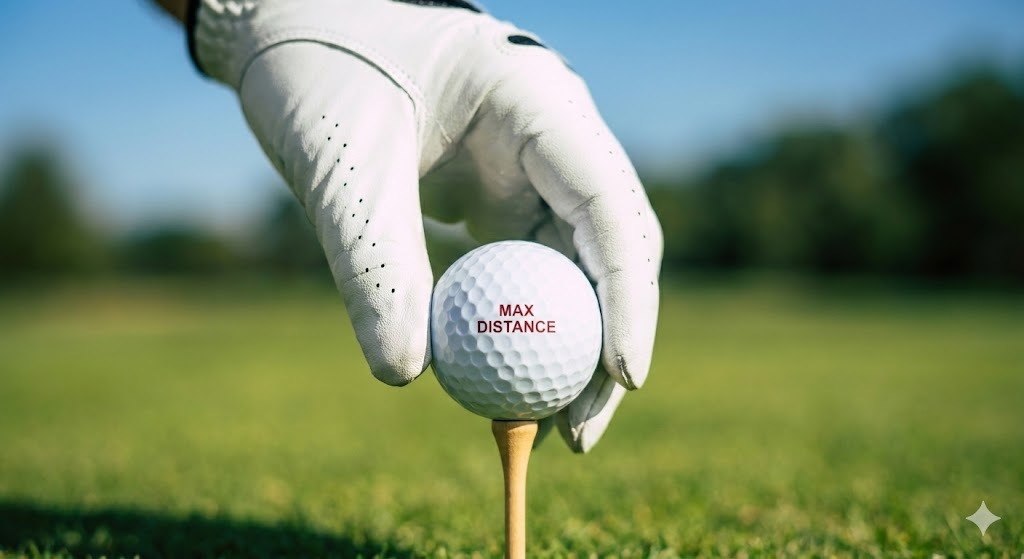
Distance is one of the most desired advantages in golf. Longer drives shorten approach shots. Shorter approaches create more scoring chances. Confidence grows when the ball flies farther with the same swing.
Yet many golfers unknowingly lose distance before they even swing.
The wrong golf ball can quietly rob yards. It can spin too much, compress poorly, or fail to match your swing speed. The result feels frustrating because effort increases while distance stays the same.
Choosing the right golf ball for maximum distance is not about hype or price. It is about fit. When the ball matches how you swing, distance improves naturally.
This guide breaks down how golf balls work, what affects distance most, and how to choose the best option for maximum yardage without sacrificing playability.
Why the Golf Ball Matters More Than Most Golfers Think
Golfers often focus on clubs and technique. The golf ball gets overlooked.
However, the ball is the only piece of equipment used on every shot. Its design influences launch, spin, speed, and flight.
A ball that compresses properly transfers energy efficiently. A mismatched ball wastes speed. Spin characteristics also matter. Too much spin reduces carry. Too little spin limits control.
Choosing the correct golf ball for maximum distance allows your swing to perform honestly.
Distance gains often appear immediately when the ball fits the player.
Understanding Compression and Distance
Compression refers to how much a golf ball deforms at impact.
High compression balls require higher swing speeds to compress fully. Low compression balls compress more easily at slower speeds.
If compression is too high for your swing speed, energy transfer suffers. The ball feels firm and launches poorly. Distance drops.
If compression is too low for your speed, excess deformation increases spin and reduces efficiency.
Matching compression to swing speed is one of the most important steps toward golf ball maximum distance.
Swing Speed and Ball Selection
Swing speed influences everything.
Slower swing speeds benefit from lower compression balls. These balls launch higher and maximize carry without requiring extra force.
Moderate swing speeds often perform best with mid-compression designs that balance speed and control.
Higher swing speeds can compress firmer balls effectively. These designs reduce excess spin and optimize launch.
Choosing a ball aligned with swing speed often adds distance without changing technique.
Construction Types and Their Impact on Distance
Golf balls come in different constructions.
Two-piece balls typically deliver maximum distance. They feature a large core and durable cover. Spin stays low. Ball speed stays high.
Three-piece balls add a mantle layer for improved control while maintaining distance.
Multi-layer balls introduce more spin control for advanced players. Distance remains strong when swing speed matches design.
For golfers prioritizing golf ball maximum distance, simpler construction often performs best.
Spin Rate and Carry Distance
Spin plays a major role in distance.
Excessive spin increases drag. Carry distance decreases. Shots balloon and fall short.
Too little spin causes shots to drop quickly without staying airborne.
Distance-focused golf balls are designed to reduce driver spin while maintaining stability.
Matching spin characteristics to swing speed and launch conditions improves carry significantly.
Launch Angle and Ball Design
Launch angle affects distance just as much as speed.
Golf balls influence launch through core design and dimple patterns.
Distance-oriented balls promote higher launch with lower spin. This combination keeps the ball in the air longer.
When launch and spin align properly, carry distance improves without swinging harder.
Golf ball maximum distance depends on optimized launch conditions.
Dimple Design and Aerodynamics
Dimples control airflow.
Well-designed dimple patterns reduce drag and increase lift. The ball stays airborne longer.
Distance balls often feature aerodynamic designs optimized for higher speeds.
While dimples may seem minor, their impact on flight efficiency is significant.
Aerodynamics quietly protect distance.
Feel vs Distance Trade-Off
Many golfers fear sacrificing feel for distance.
Distance balls tend to feel firmer. Softer balls often spin more.
However, modern designs narrow this gap. Many distance balls now offer acceptable feel around the greens.
For golfers seeking golf ball maximum distance, prioritizing performance off the tee makes sense. Feel can be adjusted through technique.
Distance gains usually outweigh minor feel differences.
Weather Conditions and Ball Choice
Conditions influence distance.
Cold temperatures reduce compression. Lower compression balls perform better in cooler weather.
Wind exaggerates spin effects. Low-spin distance balls hold their line better.
Altitude changes ball flight. Lower spin remains beneficial at elevation.
Adapting ball choice to conditions protects distance year-round.
Common Mistakes When Choosing a Distance Golf Ball
Several mistakes appear frequently.
Choosing tour-level balls without matching swing speed reduces distance. Assuming expensive means longer often disappoints.
Switching balls constantly prevents understanding performance.
Ignoring compression ratings leads to inefficiency.
Avoiding these mistakes accelerates improvement.
How to Test Golf Balls for Maximum Distance
Testing matters.
Compare balls under similar conditions. Focus on carry distance rather than total roll alone.
Observe launch height and flight stability. Notice how shots behave in the wind.
Testing on the course reveals real results better than range testing alone.
Consistency matters more than one perfect shot.
Distance vs Control Balance
Distance without control creates problems.
The right golf ball balances distance with playable spin. Fairways matter. Approach shots matter.
Most golfers benefit from maximizing distance first, then adjusting technique for control.
Golf ball maximum distance should support scoring, not sabotage it.
Who Benefits Most From Distance Golf Balls
Distance balls benefit many players.
Golfers with moderate to slower swing speeds gain the most. Seniors often see immediate improvement.
High handicappers benefit from reduced spin and straighter flight.
Even skilled players use distance balls in specific conditions.
Distance optimization suits a wide audience.
Longevity and Value Considerations
Distance balls often last longer.
Durable covers resist scuffing. Performance stays consistent.
Replacing balls less often improves value.
Distance-focused designs often cost less than tour models.
Value and performance align well.
Psychological Benefits of Added Distance
Distance boosts confidence.
Shorter approach shots feel easier. Hazards look less intimidating.
Confidence improves tempo. Tempo improves contact.
Distance gains often create a positive cycle of performance.
Conclusion: Distance Starts With the Right Ball
Maximum distance does not come from effort alone.
It comes from efficiency.
Choosing the right golf ball for maximum distance allows your swing to work properly. Compression, spin, and launch align naturally.
You do not need the most expensive ball. You need the right one.
When the ball fits your swing, distance appears without force. Confidence follows. The game feels simpler again.
FAQ
- What compression golf ball is best for maximum distance?
Compression should match swing speed. Slower speeds benefit from lower compression. - Do two-piece golf balls go farther?
Often yes. They are designed for low spin and high ball speed. - Can a golf ball really add distance?
Yes. Proper ball fit can add noticeable carry without swing changes. - Are distance balls harder to control?
They spin less, but most golfers find control improves due to straighter flight. - Should I change golf balls based on weather?
Yes. Colder conditions favor lower compression distance balls.