
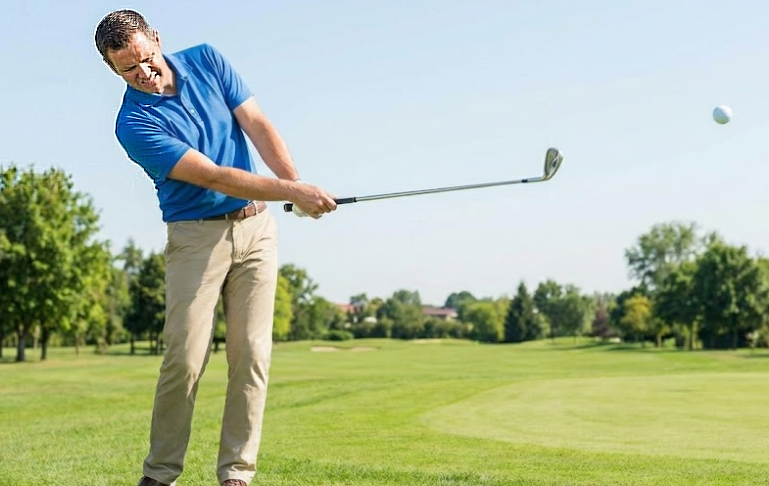
Many golfers chase distance by swinging harder. Yet approach shots still come up short.
That frustration is common.
In reality, lost yardage on approach shots often has nothing to do with power. Instead, it comes from inefficiency. Clubs that do not fit your swing quietly steal distance, consistency, and confidence.
Golf club fitting solves this problem at the source.
When clubs match how you move, energy transfers more effectively. Launch improves. Spin becomes optimized. Ball speed increases without extra effort.
This article explains how golf club fitting can add real yards to your approach shots and why proper fit matters far more than most golfers realize.
Why Distance Loss Happens on Approach Shots
Approach shots demand precision, not brute force.
Iron swings differ from drivers. Contact quality matters more. Launch windows are tighter. Spin control becomes critical.
When clubs do not fit, inefficiency creeps in. Shots launch too low or too high. Spin robs carry distance. Strike patterns drift across the face.
As a result, golfers swing harder to compensate. Timing breaks down. Confidence fades.
Golf club fitting corrects these inefficiencies by aligning equipment with motion.
Golf Club Fitting and Energy Transfer
Distance begins at impact.
Efficient energy transfer requires centered contact, proper shaft dynamics, and correct loft presentation. When any of these elements fall out of balance, distance disappears.
Golf club fitting addresses each factor systematically. Club length influences strike location. Shaft profile affects how energy loads and unloads. Loft controls launch and carry.
When these elements align, ball speed increases naturally. Effort stays the same. Results improve.
Added yardage often appears immediately during fitting sessions.
Shaft Selection and Approach Shot Distance
Shaft choice plays a major role in approach shot performance.
Too stiff and energy fails to load. Too soft and timing collapses. Both scenarios reduce distance.
Weight also matters. Heavy shafts can slow swing speed. Light shafts may disrupt tempo.
Golf club fitting identifies the shaft that matches your tempo, transition, and release. Proper shaft selection improves ball speed and launch consistency.
As a result, approach shots fly farther without forcing the swing.
Lie Angle and Centered Contact
Lie angle affects where the club strikes the ground and ball.
If the lie angle is incorrect, the face points away from target at impact. Shots leak left or right. Strike quality suffers.
Poor lie angles also reduce compression. Distance loss follows quietly.
Golf club fitting adjusts lie angle to match posture and swing plane. Centered contact improves. Ball speed increases.
Even small lie angle corrections can add noticeable yards to approach shots.
Loft Optimization and Launch Conditions
Loft controls launch angle and spin rate.
Modern irons vary widely in loft design. Stronger lofts do not guarantee more distance if launch and spin fall out of range.
Golf club fitting optimizes loft gaps and launch windows. Each iron produces a predictable trajectory.
Proper loft optimization improves carry distance while maintaining stopping power on greens.
Distance becomes usable rather than misleading.
Club Length and Swing Efficiency
Club length influences control and strike consistency.
Clubs that are too long reduce center-face contact. Clubs that are too short restrict posture and rotation.
Both scenarios limit distance.
Golf club fitting adjusts length to match height, arm length, and posture. Improved strike location follows naturally.
When impact moves toward the center, ball speed increases without extra swing effort.
Grip Size and Release Timing
Grip size often gets overlooked.
Grips that are too small encourage excessive hand action. Oversized grips can slow release.
Both issues affect face control and strike quality.
Golf club fitting includes grip evaluation. Proper grip size stabilizes release and improves consistency.
Cleaner contact leads to better compression and added yardage.
Gapping and Distance Control
Approach shots require reliable distance gaps.
Poorly fitted sets often feature overlapping distances or large gaps. Golfers struggle with club selection.
Golf club fitting ensures consistent spacing between irons. Each club serves a clear purpose.
Confidence improves when distances become predictable. Swings stay smooth.
Proper gapping protects yardage across the set.
Spin Rate and Carry Distance
Excessive spin robs carry distance.
Low spin can reduce stopping power.
Golf club fitting balances spin through shaft, loft, and head design. Launch conditions become optimized.
Balanced spin produces longer carry with controlled descent angles.
Approach shots fly farther and hold greens better.
How Fitting Improves Confidence Over the Ball
Confidence influences distance indirectly.
When golfers trust their clubs, swings stay relaxed. Tension fades. Speed improves naturally.
Golf club fitting builds that trust. Shots respond predictably. Ball flight becomes familiar.
Confidence adds yardage without conscious effort.
Why Stock Clubs Often Fall Short
Stock clubs are built for averages.
Most golfers are not average.
Golf club fitting personalizes equipment. Differences in posture, strength, and motion are accounted for.
Custom fit clubs unlock distance hidden by generic builds.
Indoor vs Outdoor Club Fitting
Both environments offer value.
Indoor fitting provides controlled conditions. Launch data remains consistent.
Outdoor fitting adds visual confirmation. Ball flight feedback builds trust.
Golf club fitting works best when data and feel align.
When to Get Fit for Maximum Benefit
Timing matters.
Golfers benefit from fitting after swing changes settle. However, beginners also gain from early fitting.
Major physical changes suggest reevaluation.
Golf club fitting remains useful at all skill levels.
How Many Yards Can Club Fitting Add
Results vary.
Some golfers gain five yards. Others gain fifteen or more.
The key lies in efficiency rather than effort.
Golf club fitting unlocks potential already present in the swing.
Long-Term Benefits Beyond Distance
Distance matters, yet consistency matters more.
Fitted clubs improve dispersion. Shot patterns tighten.
Scoring improves. Stress decreases.
Golf club fitting enhances performance beyond raw yardage.
Conclusion: Distance Is Already in Your Swing
Most golfers already possess more distance than they realize.
Inefficient equipment hides it.
Golf club fitting reveals it.
By optimizing shaft, length, loft, lie angle, and grip, approach shots gain carry without extra strain. Confidence rises. Results improve.
Club fitting does not change who you are as a golfer. It allows your swing to perform honestly.
FAQ
- Can golf club fitting really add distance to irons?
Yes. Proper fit improves energy transfer, launch, and strike quality. - Is club fitting only for low handicappers?
No. Golfers of all skill levels benefit from fitting. - How long does a golf club fitting session take?
Most sessions last between 60 and 90 minutes. - Do fitted clubs help accuracy as well as distance?
Yes. Improved fit tightens dispersion and improves consistency. - How often should clubs be re-fitted?
Every few years or after major swing or physical changes.