
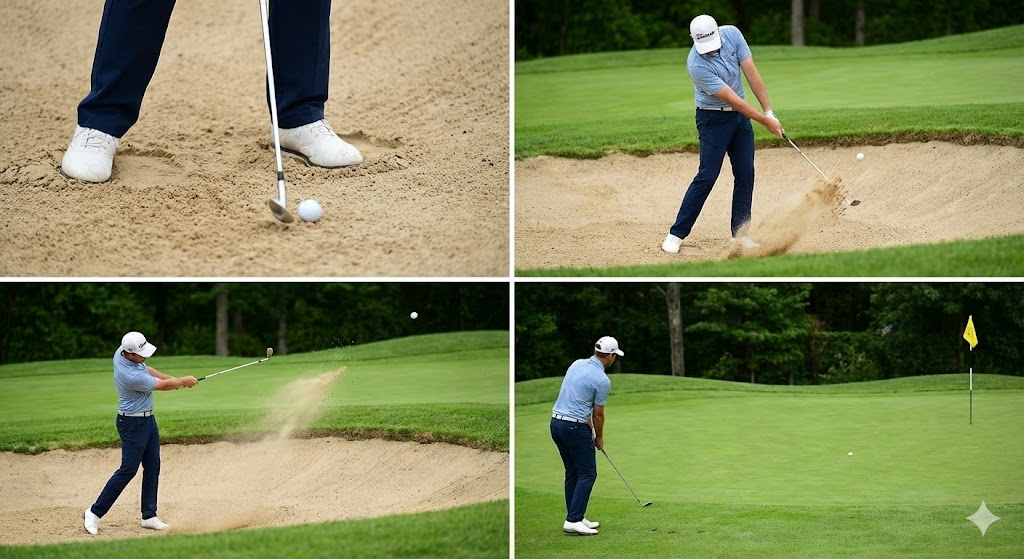
Few shots create instant tension like the fairway bunker shot. The ball sits cleanly. The distance looks manageable. Yet doubt creeps in fast. One wrong move and the club digs into sand. Another mistake sends the ball barely forward.
That pressure is common.
The fairway bunker shot feels unforgiving because margin for error is small. Clean contact is required. Confidence matters. Technique must be sound.
However, this shot is not about power or heroics. It is about precision, planning, and trust. Once you understand the fundamentals, the fear fades. Consistency replaces hesitation.
This guide will help you master the fairway bunker shot step by step. The goal is not just escape. The goal is control.
Why the Fairway Bunker Shot Feels So Difficult
The fairway bunker shot exposes poor habits quickly.
On grass, golfers can get away with slight fat contact. Sand removes that safety net. Any contact with sand before the ball steals energy. Distance disappears.
Additionally, the visual threat of sand changes behavior. Many golfers tense up. Swing speed drops. Deceleration sneaks in.
The club also interacts differently. Bounce behaves unpredictably. Sole width matters more. Angle of attack becomes critical.
Understanding these differences reduces fear. Knowledge replaces guesswork.
The fairway bunker shot punishes aggression without discipline, yet rewards calm execution.
Correct Mindset for the Fairway Bunker Shot
Mindset sets the tone before technique even begins.
The fairway bunker shot is not a recovery swing. It is a controlled strike. Accepting that reality changes decision-making.
First, choose safety over ego. Chasing maximum distance from sand invites trouble. Select a club that guarantees clean contact.
Second, commit fully. Half-hearted swings fail often. A confident motion produces better results than a tentative one.
Third, accept limitations. Sometimes the smartest play is advancing the ball rather than attacking a distant target.
This calm, practical mindset builds trust quickly.
Club Selection for the Fairway Bunker Shot
Club choice influences success more than many golfers realize.
Long irons and fairway woods demand perfection. Hybrids often perform better due to wider soles and forgiveness. Mid irons remain reliable options when distance allows.
Loft matters. Too little loft increases risk. Moderate loft improves launch from sand.
When in doubt, take more club and swing smoothly. A shorter, controlled swing produces cleaner contact than forcing speed.
Smart club selection simplifies the fairway bunker shot immediately.
Setup Fundamentals That Create Clean Contact
Setup determines outcome before the swing begins.
Ball position should remain slightly forward of center. This encourages ball-first contact. Weight favors the lead side modestly.
Feet dig lightly into the sand for stability. This prevents slipping during the swing. Grip pressure stays firm but relaxed.
The clubface remains square. Opening or closing the face introduces unnecessary complexity.
Posture stays athletic. Spine angle remains consistent. Stability builds confidence.
A disciplined setup creates predictable results.
Swing Technique for the Fairway Bunker Shot
The swing must stay compact and controlled.
Focus on striking the ball first. The clubhead should brush sand only after impact. That shallow approach protects distance.
Avoid excessive wrist action. A quiet lower body supports consistency. Rotation remains smooth rather than aggressive.
Tempo matters greatly. A steady rhythm prevents deceleration. Acceleration through the ball remains essential.
Finish balanced. A stable finish confirms proper sequencing.
The fairway bunker shot rewards discipline more than effort.
Common Mistakes That Ruin Fairway Bunker Shots
Many errors repeat themselves frequently.
Hitting down too steeply digs the club into sand. Swinging too softly causes deceleration. Trying to lift the ball adds loft artificially and thins contact.
Another mistake involves poor alignment. Fear often pulls shots right or left.
Finally, improper club choice creates unnecessary difficulty. Choosing too little loft increases risk dramatically.
Awareness of these mistakes prevents repetition.
Distance Control From Fairway Bunkers
Distance control requires planning.
Expect reduced distance. Sand absorbs energy. Even clean strikes lose some yardage.
Take extra club accordingly. Swing with normal tempo rather than extra force.
Lower trajectory shots often work better. Flighting the ball reduces spin and increases predictability.
Distance consistency improves when expectations stay realistic.
Lie Assessment in Fairway Bunkers
Not all bunker lies are equal.
A clean lie sitting atop sand offers the best chance. A buried or plugged ball limits options.
Firm sand plays differently than soft sand. Adjust swing depth accordingly.
Pebbles or debris introduce risk. Sometimes the safest play is sideways.
Evaluating the lie before swinging protects both score and confidence.
Practicing the Fairway Bunker Shot Effectively
Practice builds comfort quickly.
Begin with short irons. Focus on clean contact rather than distance. Gradually progress to longer clubs.
Practice maintaining ball-first contact. Draw lines in sand to visualize strike location.
Repetition removes fear. Familiarity builds trust.
Practice transforms the fairway bunker shot from threat to opportunity.
Course Strategy When Facing Fairway Bunkers
Strategy prevents unnecessary pressure.
Avoid fairway bunkers when possible. Course management matters.
When bunker placement cannot be avoided, plan the shot carefully. Choose conservative targets.
Accept partial success. Advancing the ball safely often saves strokes.
Smart decisions reduce stress.
Mental Confidence and the Fairway Bunker Shot
Confidence grows from preparation.
When technique feels familiar, fear fades. Commitment replaces hesitation.
Trust your setup. Trust your swing. Accept the outcome calmly.
Mental strength improves execution more than force ever will.
How Equipment Influences the Fairway Bunker Shot
Equipment choices matter.
Irons with narrower soles reduce digging. Hybrids provide forgiveness.
Worn grooves reduce spin and control. Properly fitted clubs improve confidence.
Equipment should support consistency rather than fight it.
Weather and Sand Conditions
Conditions influence results.
Wet sand plays firmer. Dry sand absorbs more energy.
Wind affects trajectory choices. Adjust club accordingly.
Awareness of conditions improves planning.
Advanced Tips for Skilled Golfers
Experienced players can refine further.
Ball position adjustments fine-tune strike. Slightly lower flight improves control.
Visualizing contact point sharpens focus. Quiet hands reduce error.
Advanced technique remains rooted in fundamentals.
Why Mastering the Fairway Bunker Shot Lowers Scores
This shot appears more often than expected.
Saving strokes from bunkers protects momentum. Confidence spreads to other shots.
Avoiding disasters improves scoring consistency.
Mastery here pays dividends across rounds.
Conclusion: Turn the Fairway Bunker Shot Into a Strength
The fairway bunker shot does not need to inspire fear. With proper setup, calm mindset, and disciplined swing, it becomes manageable.
This shot rewards patience and preparation. It punishes ego and hesitation.
By mastering the fundamentals outlined here, you gain control. Confidence replaces doubt. Bunkers lose power over your scorecard.
The fairway bunker shot becomes just another challenge you are ready to handle.
FAQ
- Should I swing harder from a fairway bunker?
No. Take more club and maintain smooth tempo for cleaner contact. - Is a hybrid better than an iron from a fairway bunker?
Often yes, especially when distance allows and sand is soft. - Can I use a fairway wood from a fairway bunker?
Only with a perfect lie and firm sand. Risk remains higher. - Why do my bunker shots come up short?
Sand absorbs energy. Extra club and ball-first contact help. - How often should I practice fairway bunker shots?
Regular short sessions build confidence faster than occasional long practice.